Plant trailer manufacturers: European and Australian makes
Who actually builds plant trailers for the Australian market — the European makes known for low tare and shallow ramps, and the Australian makers known for ruggedness and local support. Real makers, real links, and how to compare any two of them fairly.
How to compare any two brands
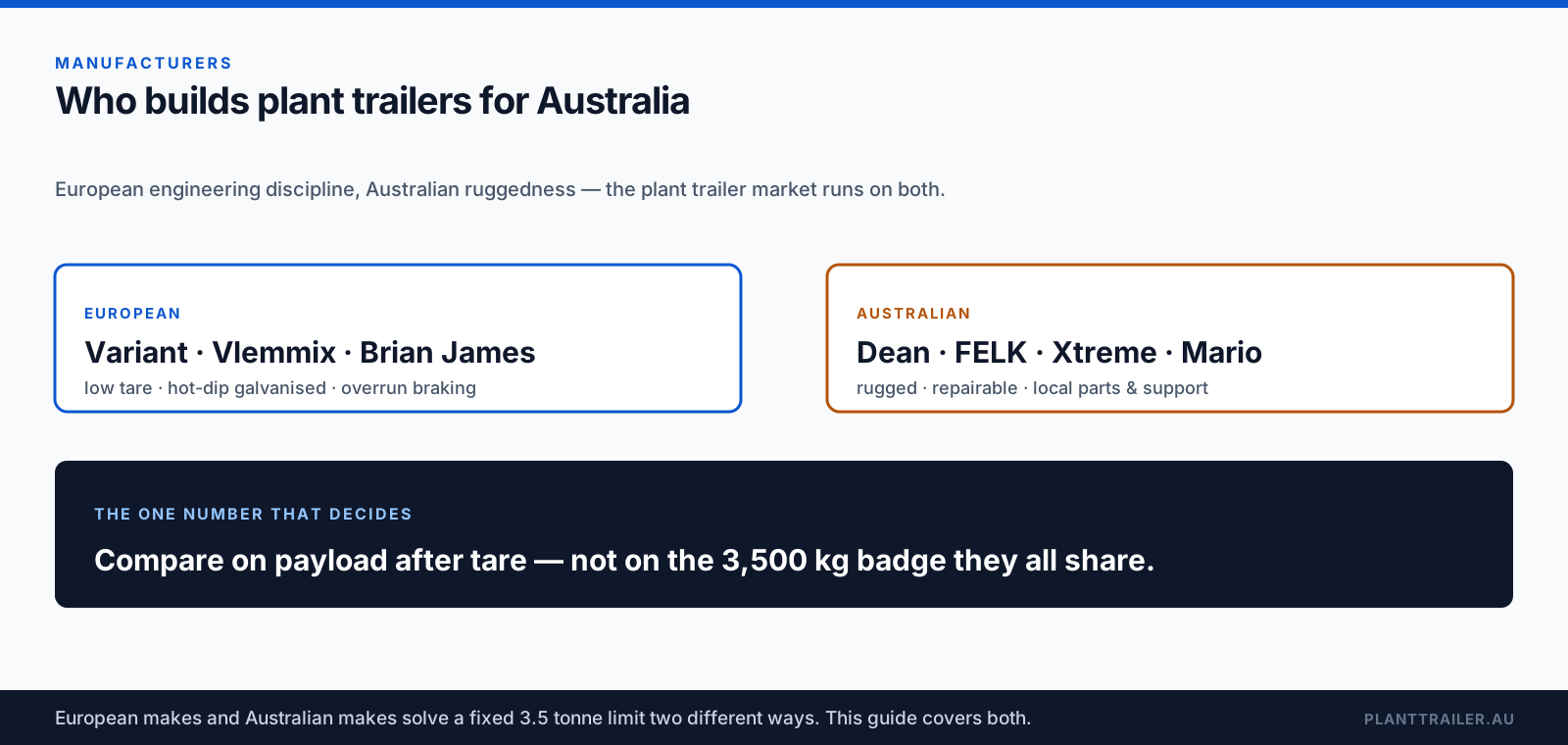
Every plant trailer under 3.5 tonnes shares the same 3,500 kg ATM badge, so the badge tells you nothing. Compare on four numbers instead: payload after tare (ATM minus the plated tare), usable deck length and width, load height, and effective ramp length — the last two give you the ramp angle. Those five figures separate a trailer your machine can actually use from one it cannot.
This site leans European because that is where low tare and low load height are pushed hardest — but a heavier Australian build often wins on ruggedness, repairability and regional parts. Both are covered below.
European makes in Australia
European plant trailers are engineered around a fixed 3,500 kg limit: minimise tare, drop the deck, and brake mechanically with an overrun coupling. The result is high payload, shallow ramp angles and hot dip galvanised construction. Variant is the brand this site covers in most depth — it is distributed in Australia and its published plant range is the reference point for the figures used throughout the site.
Variant
EuropeanDanish-built, distributed in Australia. The 3516 B3, 3518 B4 and 3518 M3 plant range publishes 593–785 kg tare, 2,715–2,907 kg payload, hot dip galvanised chassis, phenolic ply decks and overrun braking with auto-reverse.
Visit variant-trailers.com.au →Vlemmix
EuropeanDutch manufacturer with a broad machine-transporter and low-bed range. Galvanised construction and a strong presence in the European plant-transport market.
Visit vlemmix-trailers.com →Brian James
EuropeanUK maker known for premium plant and digger transporters (Cargo, Digger Plant, Tipper ranges). Widely regarded as a benchmark for finish and load security.
Visit brianjames.co.uk →Humbaur
EuropeanLarge German trailer manufacturer with dedicated machine-transporter models and hot dip galvanised chassis across the range.
Visit humbaur.com →Ifor Williams
EuropeanWelsh maker whose plant and general-duty trailers are among the most recognised in the trade, with a deep dealer and parts network.
Visit iforwilliams.co.uk →
Australian makes
Australian plant trailers are more often engineered around rough use, simple repair and regional parts availability. Builds are typically heavier — which costs some payload — but a fully-welded steel trailer you can fix with a local welder has real value a long way from a dealer. The four makers below are established Australian manufacturers with current plant or machinery trailer ranges.
Dean Trailers
AustralianGoulburn, NSW — building trailers since 1948. Plant (PT), Beavertail (BT), Tilt Bed (TB) and Flat Top (FT) series, fully-welded (not bolted) Australian steel, painted or galvanised, with a 5-year frame warranty and VSB1 compliance.
Visit deantrailers.com.au →FELK Engineering
AustralianWarners Bay, NSW — a third-generation family business, 55+ years, building hot dip galvanised trailers from Australian steel on-site. Plant, tilt and flatbed models, RMS-certified to Australian standards.
Visit felks.com.au →Xtreme Trailers
AustralianSmithfield, NSW — galvanised plant trailers from 8×4 up to 10×6, all rated 3,500 kg ATM, positioned at the value end with finance options. A common entry point for owner-operators.
Visit xtremetrailers.com.au →Mario Trailers
AustralianSydney — custom-built machinery trailers from 2,000 kg to 3,500 kg, with checkerplate or mesh floors, single or full-width ramps, and a choice of mechanical or electric brakes and painted or galvanised finish.
Visit mariotrailers.com.au →
Other Australian makers worth a look for plant and machinery trailers include Roshar, Coastmac, Zammit and Wrangler, plus many regional builders. The four above are simply the ones covered here in detail; inclusion is not endorsement, and a local builder near you may suit better on parts and service.
European versus Australian, side by side
| European makes | Australian makes | |
|---|---|---|
| Tare weight | Minimised — 593–785 kg on 3.5t Variant models1 | Higher; heavier sections, more steel |
| Payload | High — up to ~2,900 kg | Often 2,300–2,600 kg |
| Braking | Mechanical overrun, auto-reverse | Often electric with in-cab controller |
| Corrosion | Hot dip galvanised as standard | Galvanised or painted, varies by builder6 |
| Deck | 18–21 mm phenolic plywood | Steel checkerplate or hardwood |
| Repairability | Component replacement, European parts | Weld it locally |
| Parts in regional AU | Improving; check your dealer | Generally excellent |
Compare on cost per kilogram of payload, not sticker price. Divide the price by the payload (ATM minus plated tare). A lighter European trailer and a heavier local one can land at almost the same cost-per-kilogram — but only one of them may clear your machine’s weight with its attachments on board. Run the number, then check which side of your machine’s weight the payload falls on.
Which should you buy?
Start from the machine, not the brand. If your machine sits close to the payload ceiling, or you load on tight sites where ramp angle matters, the European numbers win — and Variant’s published figures are the ones to beat. If you run remote, tow on unsealed roads and want anything fixable with a welder and locally stocked parts, a rugged Australian build has real merit. Either way, get the plated tare and the payload that follows from it in writing before you compare anything else. The full method is in the buying guide.
Frequently asked questions
Who makes the best plant trailers in Australia?
There is no single best — it depends on the machine and how you use it. European makes such as Variant lead on low tare, high payload and shallow ramp angles inside the 3,500 kg limit. Australian makers such as Dean, FELK, Xtreme and Mario lead on ruggedness, simple repair and local parts. Compare on payload after tare, deck size, load height and ramp length rather than on brand reputation alone.
Are European plant trailers available in Australia?
Yes. Variant (Danish) is distributed in Australia with a full plant and machinery range. Brian James (UK), Vlemmix (Netherlands), Humbaur (Germany) and Ifor Williams (Wales) are also present through importers and dealers. They are supplied with Australian-compliant couplings, AS 4177 chains and lighting, and their mechanical overrun braking needs no in-cab controller.
Is Dean Trailers Australian made?
Yes. Dean Trailers has manufactured in Australia since 1948, based in Goulburn, NSW, building fully-welded trailers from Australian steel across plant, beavertail, tilt-bed and flat-top series, with painted or galvanised finishes and a 5-year frame warranty.
What is the difference between FELK and Xtreme trailers?
FELK Engineering (Warners Bay, NSW) is a long-established, third-generation maker building hot dip galvanised trailers from Australian steel to RMS certification — positioned as heavy-duty. Xtreme Trailers (Smithfield, NSW) offers galvanised plant trailers at the value end of the market with finance options, from 8×4 up to 10×6, all rated 3,500 kg ATM. FELK leans premium and custom; Xtreme leans value and off-the-shelf.
Does Mario Trailers build custom machinery trailers?
Yes. Mario Trailers in Sydney custom-builds machinery trailers from 2,000 kg to 3,500 kg, letting you specify floor type (checkerplate or mesh), ramp configuration (single or full-width), brake system (mechanical or electric) and finish (painted or galvanised) to suit the machine you carry.
Should I buy European or Australian?
Buy for the machine. If it is near the payload ceiling or you need shallow ramp angles on tight sites, a low-tare European build (Variant is the benchmark) wins on numbers. If you run remote and value simple repair and local parts, a rugged Australian build has the edge. In every case, get the plated tare and the resulting payload in writing before comparing anything else.
Sources and further reading
- Variant plant & machinery trailers (Australian distributor site) — variant-trailers.com.au/category/trailers/plant-machinery-trailers/
- Vlemmix Trailers — machine transporters — www.vlemmix-trailers.com/
- Brian James Trailers — plant & digger transporters — www.brianjames.co.uk/
- Humbaur — machine transporter trailers — www.humbaur.com/en/
- Ifor Williams Trailers — plant & general duty — www.iforwilliams.co.uk/
- Dean Trailers — Australian trailer manufacturer since 1948 — deantrailers.com.au/
- FELK Engineering — Australian-made trailers, Warners Bay NSW — felks.com.au/
- Xtreme Trailers — plant trailers (3500 kg ATM) — www.xtremetrailers.com.au/product-category/trailers/plant-trailer/
- Mario Trailers — custom machinery trailers, Sydney — www.mariotrailers.com.au/machinery-trailers/6
- Plant & machinery trailers directory, IndustrySearch Australia — www.industrysearch.com.au/
Figures were checked against the sources above on 2026-08-26. Manufacturer specifications change without notice — confirm weights and dimensions against the current compliance plate and specification sheet before towing.